
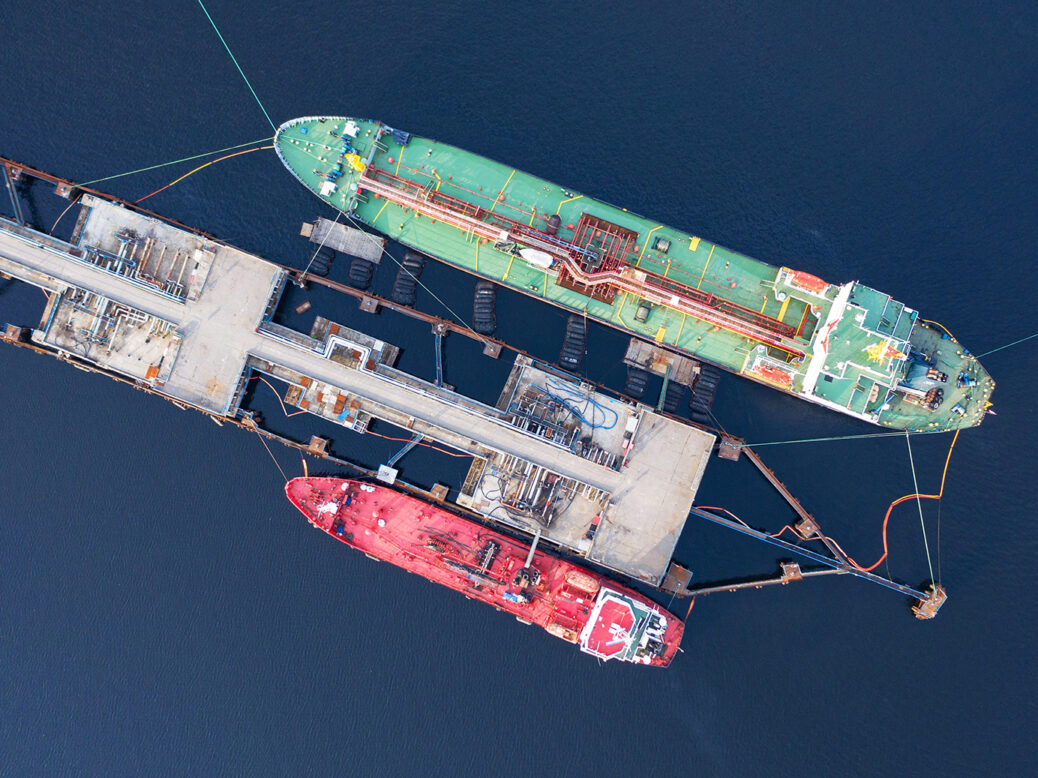
In his 2016 book Blood Oil: Tyrants, Violence, and the Rules that Run the World, the American philosopher Leif Wenar argues that oil is a curse in an almost literal sense. Wars had been waged, lives lost, the democracy and development of dozens of countries blocked and the climate heated to the edge of catastrophe, all because of oil. To see us through the transition to net zero, Wenar proposes something like the Fair Trade certification on groceries like coffee and chocolate, where petrol from Norway, Nigeria, and a few other decent petrostates would be traded separately from petrol made of Russian or Iranian crude. But tracing the origins of the oil in your petrol is far harder than tracing the cacao beans in your chocolate. From the US Gulf Coast to India, the world’s biggest refineries depend on mixing crudes that come from different fields and continents. When petrol, diesel, or plastic reaches the consumer, you never know whether its raw material came from a peaceful country or an aggressive one, a democracy or a despotism.
The state must do what the market cannot. Rarely acknowledged under neoliberalism, this logic underlies package after package of European and American sanctions. On 23 July, EU ambassadors agreed the 21st sanctions package against Russia, which singled out oil as the commodity financing the Russian war. Five days later, the US Senate advanced the Lindsey O Graham Sanctioning Russia and Iran Act of 2026. The measures followed a long series of statutes that chased two objectives – cutting Russia’s profits from the oil trade while preventing a spike in the global oil price.
These objectives have been achieved, though only in a roundabout way. The campaign began with the G7-approved price cap in 2022, later extended to Russia’s refined products. In response to this, Russia redirected most of its oil exports from Europe to Asia. The new buyers, China and India, helped the belligerent sustain its economy.
The sanctions bit not by stopping Russia’s oil exports, but by making them less profitable. Russia pays big money for moving its oil around the planet: each trip costs 10-20 per cent of the cargo’s value. Before the war, a tanker loading in the Baltic could reach a European refinery, say Rotterdam, in three days; today, the same cargo takes about a month to reach India or China. The pre-war price of a trip from the Baltic to China was about a third of the current one. Operating in the grey zone of international law, the shadow tankers sail “dark”, with their transponders switched off; they transfer oil mid-voyage from ship to ship, blending it to hide its origin; they wait in queues, running up huge demurrage fees; they return empty, whereas before the war they would carry a cargo back to European ports. Many of the vessels are old and shoddy.

While their sanctions are dodged and debased, Western governments can claim one advance: Russia pays dearly for its circumnavigations and loses a slice of its margins.
But Europe still has not washed its hands of Russian oil, or Russian coffers of European money. It may no longer import Russian oil, but it still gains from its commerce.
Before the war in Ukraine, most of the tankers carrying Russian oil belonged to Greek owners. Under the pressure of sanctions, the Greeks sold a large part of their ageing fleet to shadow (ie, mostly Russian) companies. Greek oligarchs earned well on this deal, and Russia didn’t suffer much either, now saving on transit fees. But even today, a minor share – about 15 per cent of the transported oil – still moves in Greek tankers. Formally compliant with European sanctions, Greek shipowners have in fact profited enormously from the war. Redistributing Russian profits in favour of Greece, a long-suffering member state, could even pass as an EU objective – but it has not been met: under the Greek constitution, shipowners pay no corporation tax.
This is why the 21st sanctions package was adopted after multiple delays. Greece lifted its veto only after securing that its oligarchs’ LNG transshipment would continue. Austria protected Raiffeisen Bank, which still operated in Russia. Trade in traditional Russian commodities, cod and sable, also received exemptions. All this followed the fight over the 20th package in the spring, when Greece and Malta blocked a full ban on maritime services for Russian oil. For the Commission, each round of sanctions now works as an auction in which members price their consent. That is not even to think about sanctioning the laundering states, such as India and Turkey, that process Russian oil and send their products to consumers that would not buy Russian fuels.
We are all cursed by oil. In its classical formulation, the oil curse only afflicts the outright petrostates that pump the hydrocarbons. But a second-order curse acts on the transit states that move fossil fuels. It is amazing to see Denmark and Poland blessing the passage of Russian tankers – enormous, rusty, full of flammables – along their well-groomed coasts. You cannot take part in the profits of the petrostate and not, in some way, share its political interests.
The oil traffic should be wound down despite its rents, as pipeline gas was. It is insane that tankers are regulated more lightly than motorcycles. In recent days we saw Zelensky become the first international leader received by Andy Burnham as prime minister. We saw Zelensky showing Trump that he does, after all, have cards — and some of them are trump cards. He has found his own way to “sanction” Russia: long-range strikes that burn its refineries and logistic centres. Hugging Zelensky is now the default for global leaders, but their inability to sanction Russia effectively is just as apparent. If Europe has learned to break its addiction to the profits from burning Russian molecules, it has not yet confronted its addiction to the fees for moving them.
[Further reading: Andy Burnham faces a dangerous world]
Content from our partners



Related
Join the debate
Subscribe here to comment